M I R R O R E D C E N T R E
4 December 2025 — 7 February 2026
A duo-exhibition by Dori Deng & Ylva Carlgren, in collaboration with Galerie Bacqueville, Lille
Greek architecture taught me that the column is where the light is not, and the space between is where the light is. – Louis Kahn
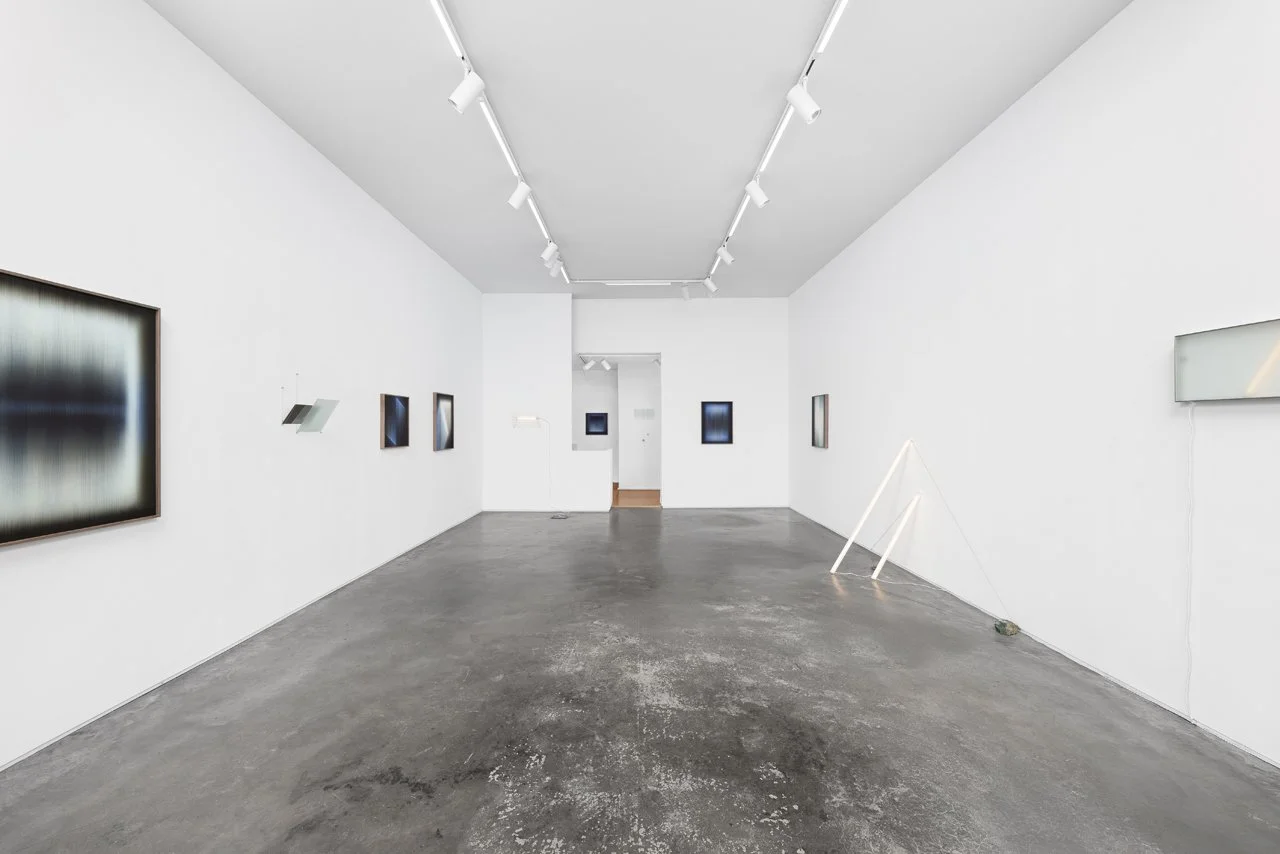
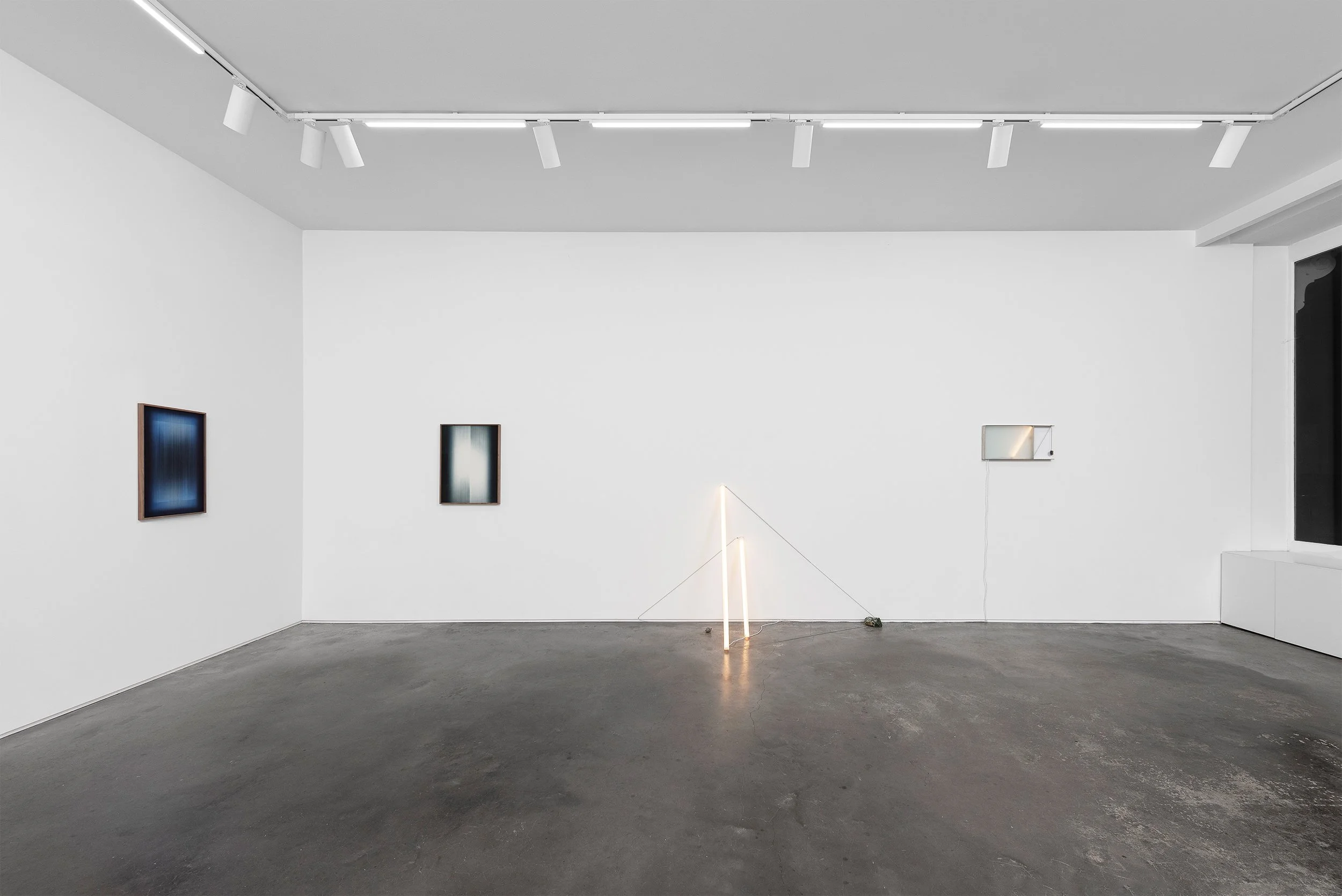
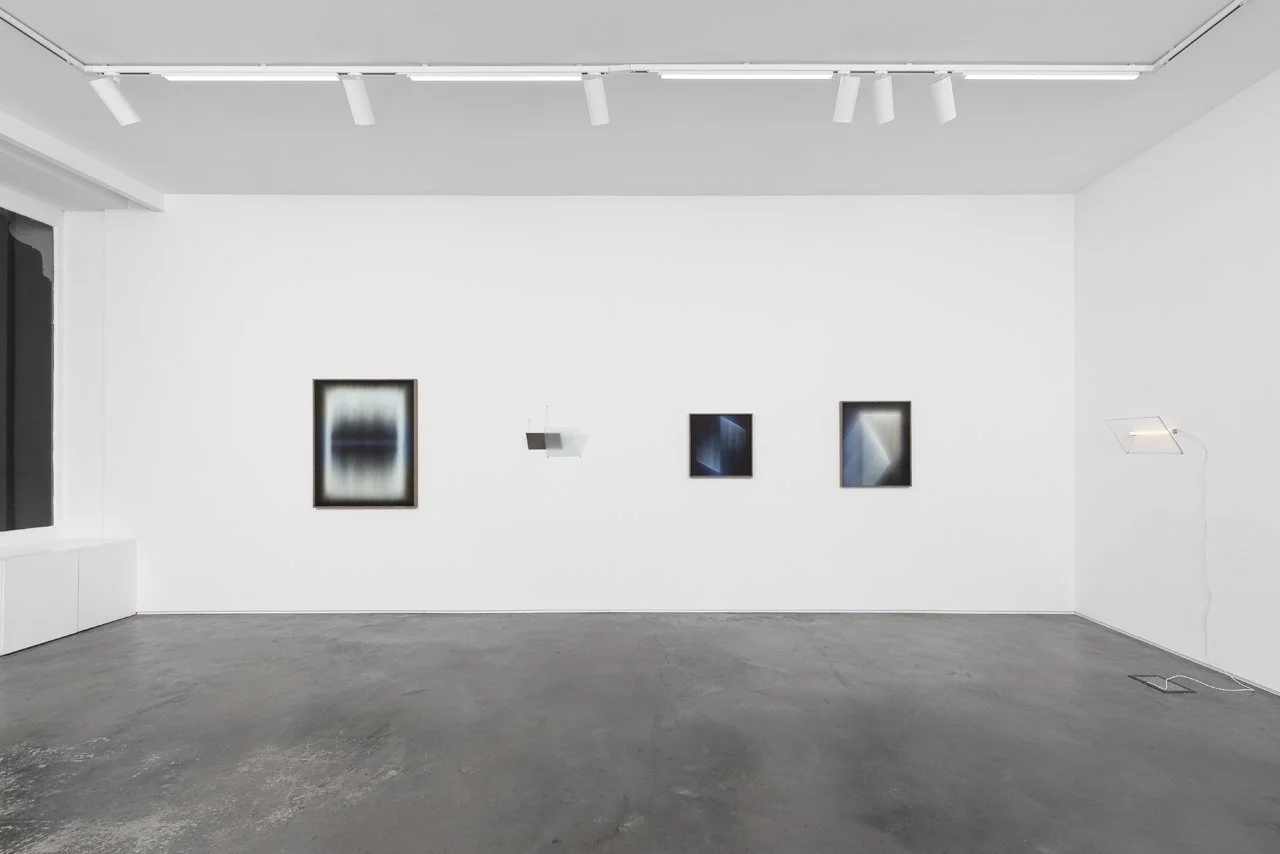
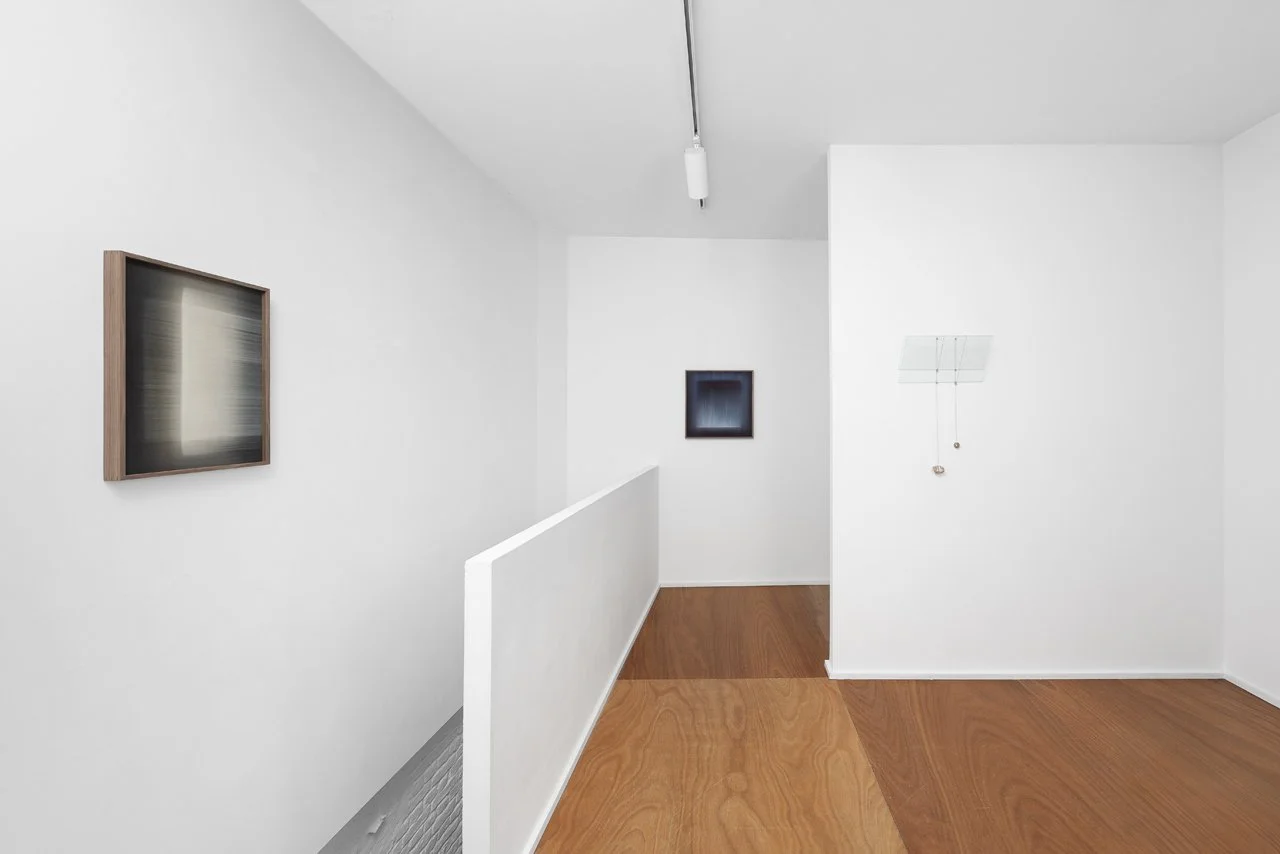
Between the two artists, Dori Deng and Ylva Carlgren, one expands flat surfaces into three-dimensional structures, while the other flattens three-dimensional perspectives onto a visual surface. They seem to be conducting opposite directions of exploration yet converge in a shared investigation of light and space. Together, at Galerie Bacqueville, the two artists form a physical dialogue about their opposing yet interconnected approaches to light and dark, surface and structure. The exhibition space becomes a physical meeting point that centres the mirrored actions of their art making.
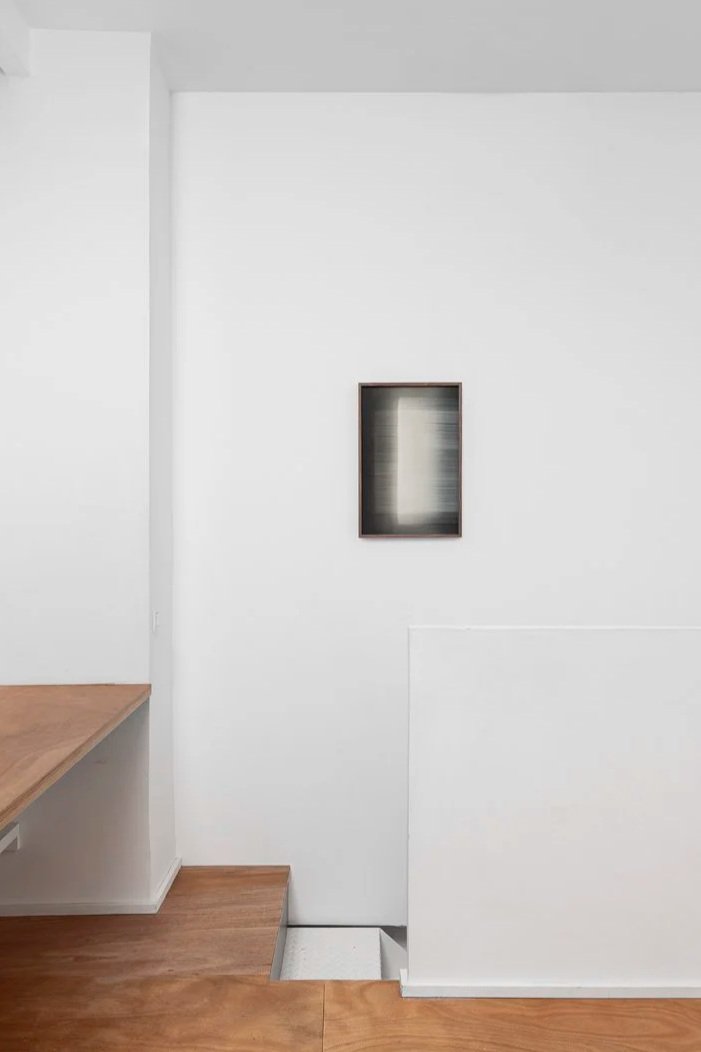
Carlgren’s watercolour paintings often seem illusive. With a background in realism, she has developed a layering technique, at first sight not immediately recognisable as painting.
The brushstrokes contain traces of her movements, yet the precision of each movement does not define any clear composition. The texture confuses the viewer with its tension between the handmade and a seemingly “digital” aesthetic. Her gestures are highly precise, but no focal point or identifiable structure emerges. Suggestions are raised, but with no direct answers. In the new work Apart From (2025), an asymmetric composition of light and dark shapes reflects one another, as if two opposite layers are peeling apart from a centre. Which side is dark and which is light? Are they in opposition, or are they lying flat together? What space within the painting is real? The image seems reminiscent of something, but of what? In Carlgren’s own words: “Sometimes a painting is more of a space, sometimes more of an object, sometimes just a material that light passes through. Oscillating between the known and the unknown, the work contains a duality of object and illusion.
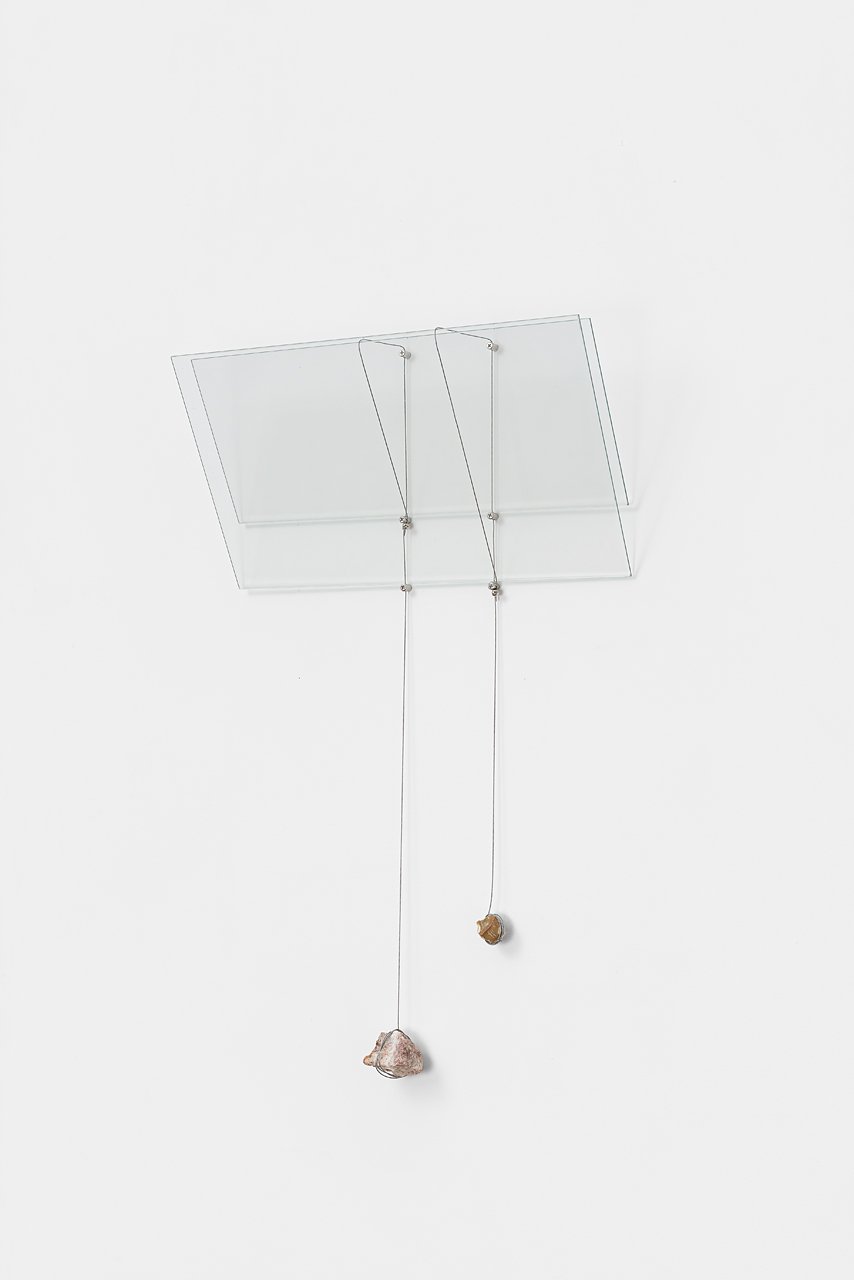
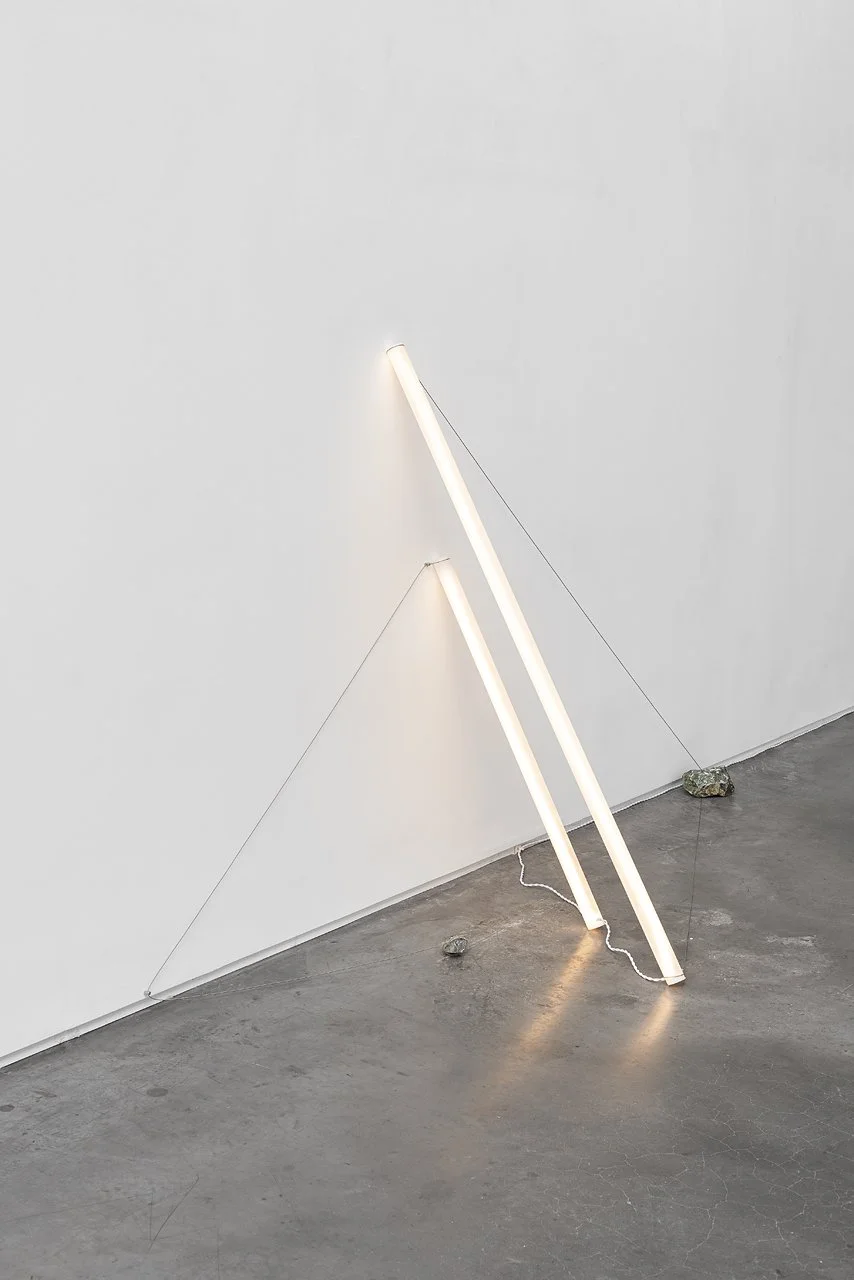
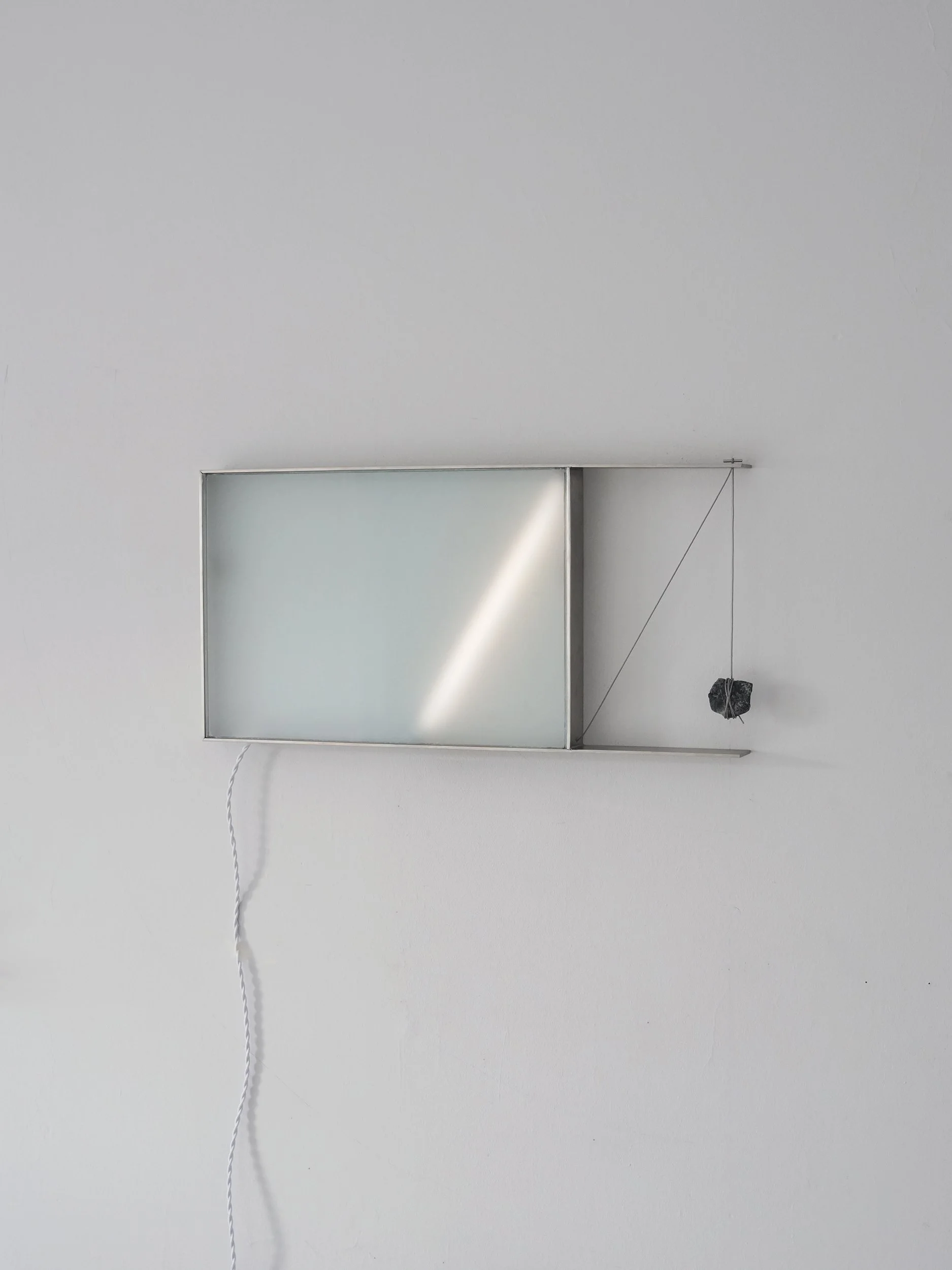
Three-dimensional form, luminosity, and the redefined gravity are also contained in Deng’s installations. Known for using light as the medium, Deng illustrates three-dimensional structures that challenge our perceptive understanding of a space. Through analogue lighting equipment and architectural materials, each component holds its physical weight, yet the work appears to redefine gravity, its luminosity blurring the reading of three-dimensional forms. From projection light in earlier works to recent installations where light tubes and glass panels interact with daylight, Deng continues to challenge the viewer's perception of gravity and geometric structure. Her ongoing research-based Expansion Series is rooted in Modernist architecture and opens a path to question our ongoing debates around the handmade and the industrial, a century after those revolutions began. Expansion Series, Work No. 46 (2025) is a wall installation balancing machine-made precision, handcrafted detail, and natural gravity: a piece of unpolished marble hangs by a metal wire, forming a careful composition with effortless poise. Other installations featuring light tubes expand single-plane geometry into intersecting three-dimensional forms. Moving around them activates shifting readings of structure. Everything is real; only our subjectivity is an illusion.
Both born in the 1980s, the two female artists come from opposite influences and upbringings. Deng was born in South China and has spent half of her life in the UK, deeply engaged with twentieth-century European experimental art and design. Swedish-born Carlgren has developed strong connections with Japanese culture through ongoing research trips and exhibitions. Her unique painting technique has evolved through the use of Japanese and Chinese brushes, seamlessly merging these influences with a Scandinavian aesthetic. The two artists’ paths come from opposite directions, yet meet through their shared interests in light and space, monochrome expression, and structural precision. Profoundly, at a similar point in time, both artists have found themselves shifting from precision and control toward following intuition. In Carlgren’s new works, the monochrome colours of light and dark now contain a wider range of tones: cool and warm hues subtly shown through layers of brushwork. The colours are, in some ways, directing her definition of shapes on paper. In parallel, Deng’s materials lean and drape under gravity naturally, distinctions between artificial and natural light become blur, and each element responds intuitively to time and space. Both artists confidently allow their materials to lead the act of making.
Opposing yet aligned; different yet connected. Surfaces with depth; structures with texture. A frame within a frame; a shape unfolds from other shapes. Wherever the centre lies, the two artists meet and reflect.
Words by Dori Deng
About the Artist
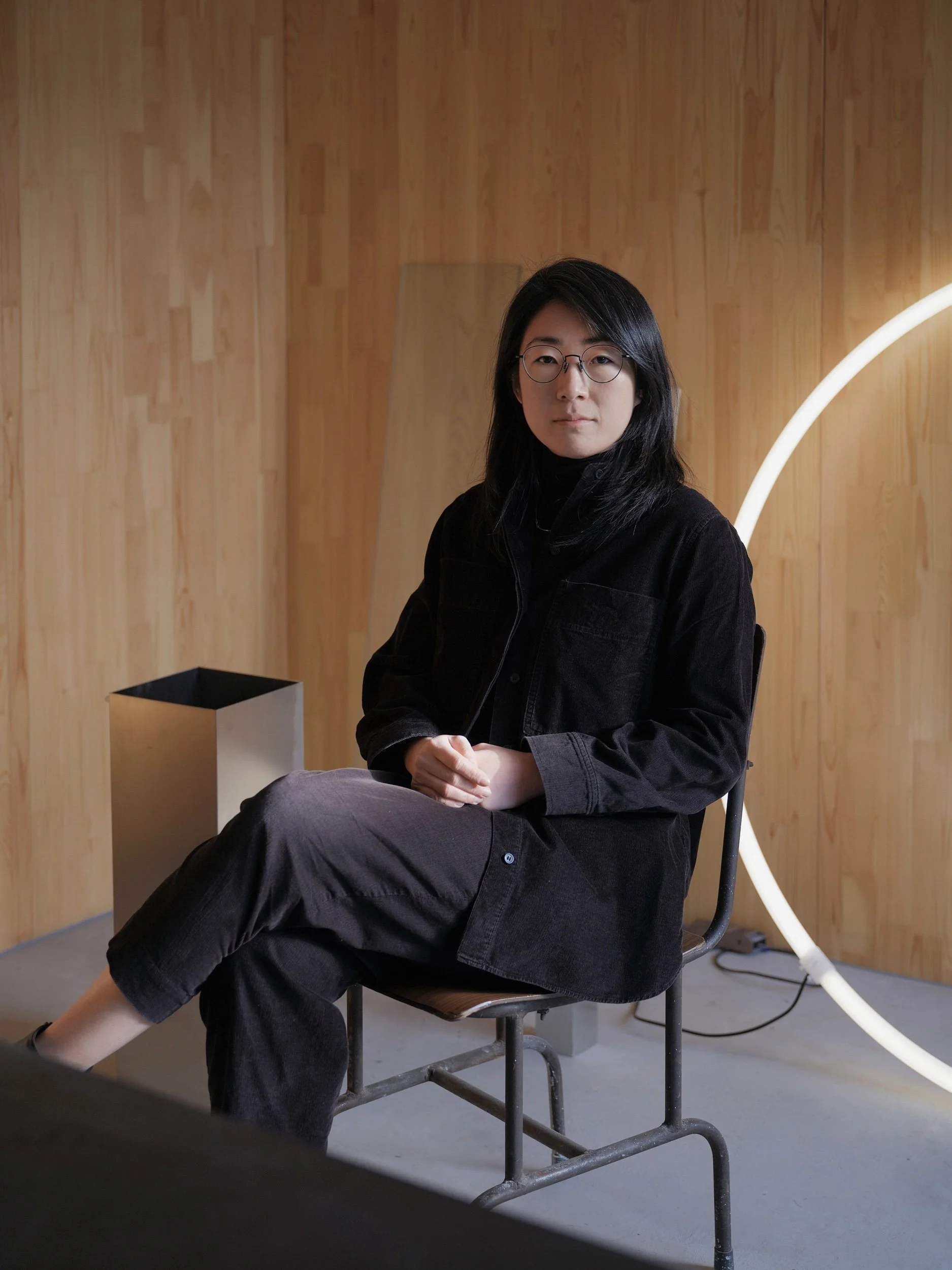
DORI DENG
(b.1985, UK)
Dori Deng is a Chinese-British multidisciplinary artist living and working in the UK. Dedicated to the medium of projected light, Deng investigated the temporal and structural qualities of the medium and orchestrated unique compositions of light, space and time. Deng’s art practice balances order and chance — forming harmony by engineering the organic. Her lightworks offer tangible experiences with temporal immediacy. Light as an abstract medium liberated Deng’s creativity from the limit of form or scale, her lightworks ranged from sculpture, architectural installation, to staged performances. Light functions as either the object or the subject, but a sensual abstract — a tool to evoke our unaware notion connected to architectural space, further to time.
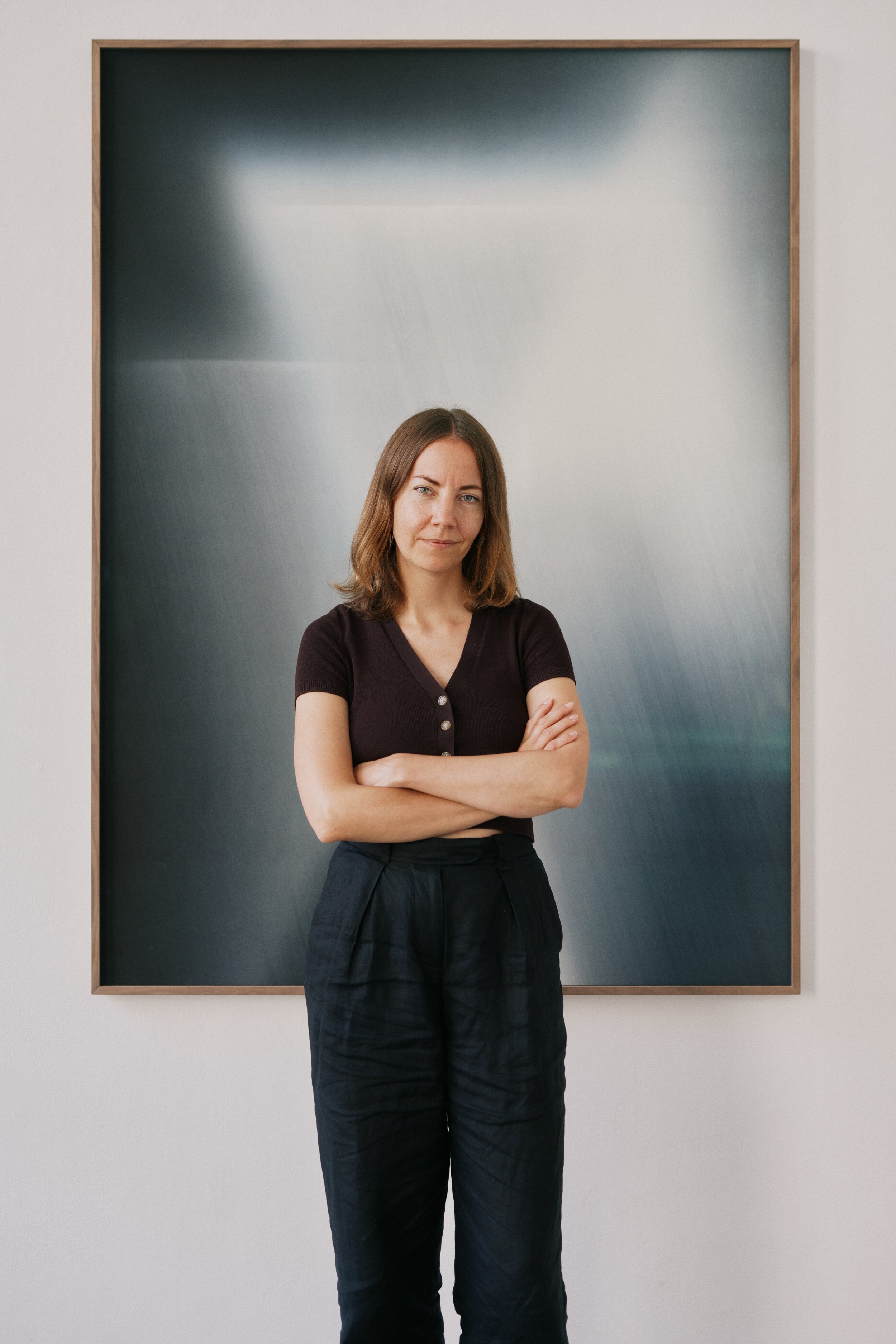
YLVA CARLGREN
(b.1984, Sweden)
Ylva Carlgren is a Swedish painter lives and works in Stockholm. She is known for her elegantly minimalist watercolor paintings created with skillful control by many fine layers of applied pigment. Carlgren is drawn to the in-between, the grandness of ambiguity where something can be nothing and everything all at once. The oftentimes monochrome gradients are applied to bring back or forth light, creating delicate shifts that suggest figure but rarely do.
Exhibited Artworks